Affective Design: An Emotional Systems Framework
Our studio has developed an evidence-based approach to designing landscapes that respond to the diverse spectrum of human emotional experiences. Based on neuroscientist Jaak Panksepp’s research on primary emotion systems, we’ve created a practical framework that transforms psychological insights into design strategies. Our framework focuses on seven core emotional systems:
- Play: Encouraging exploration and social connection
- Seek: Supporting curiosity and discovery
- Care: Fostering nurturing environments
- Fear: Creating spaces for safety and retreat
- Rage: Providing outlets for emotional regulation
- Desire: Inspiring engagement and attraction
- Grief: Accommodating reflection and processing
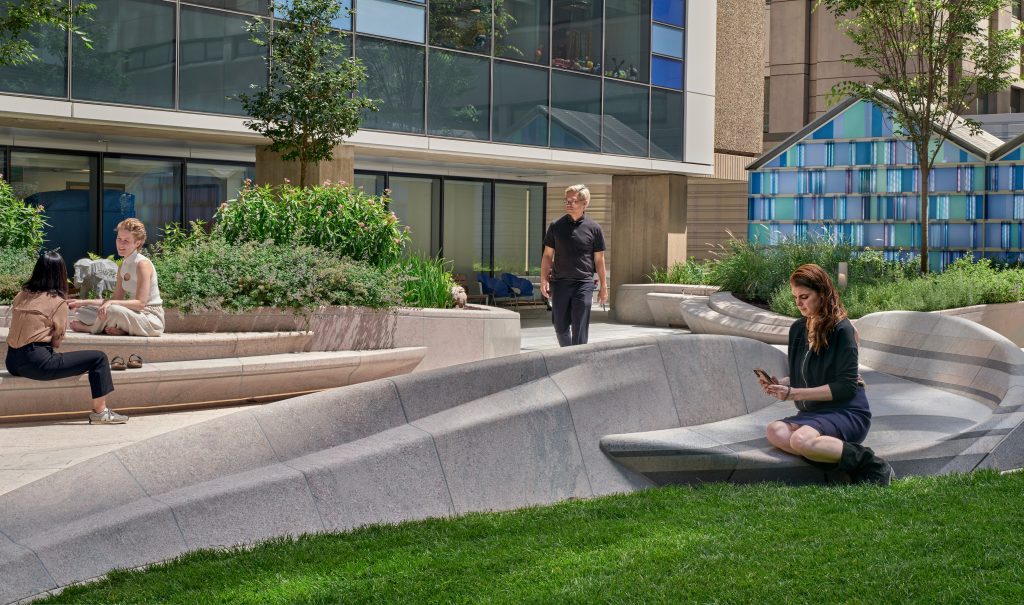
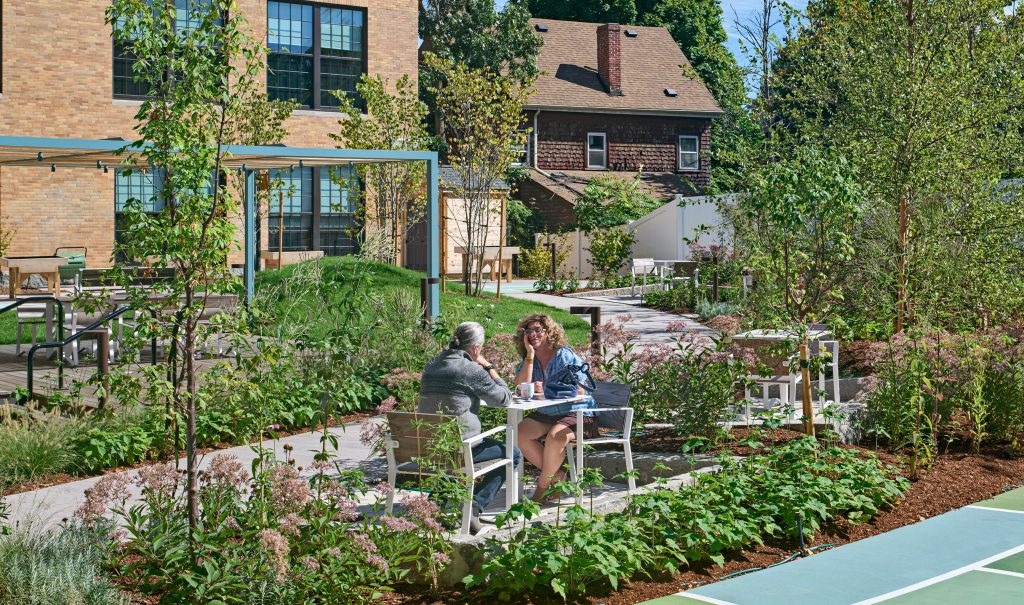
We’ve implemented this framework across healthcare environments, senior housing, and public spaces, including Boston Children’s Hospital, The Pryde LGBTQ+ Senior Housing, and Ford’s Michigan Central in Detroit. In these projects, our emotion-centered approach has helped create environments that support diverse cognitive experiences and emotional needs through thoughtful spatial organization, material selection, and programming. For healthcare environments, this might mean creating protected alcoves for emotional regulation and reflection, while in public parks, it could involve designing playful topography that encourages exploration and social connection. At The Pryde, our framework helped shape spaces that foster both community connection and individual comfort. This systematic approach ensures that emotional and cognitive diversity aren’t afterthoughts but fundamental drivers of our design process, resulting in more inclusive and emotionally resonant landscapes.