Michigan Central Park
Detroit, MI
Detroit, MI
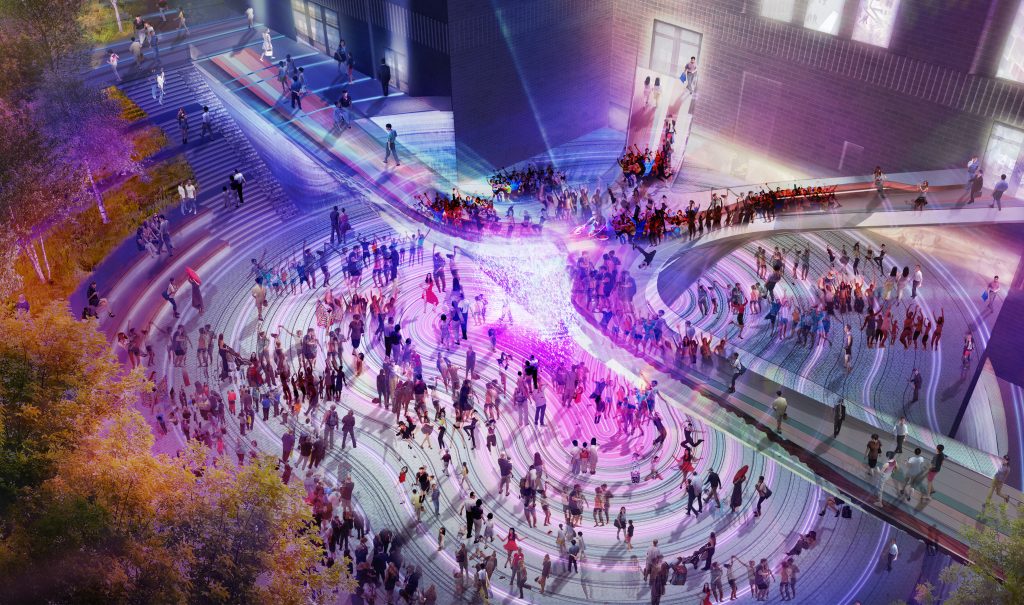
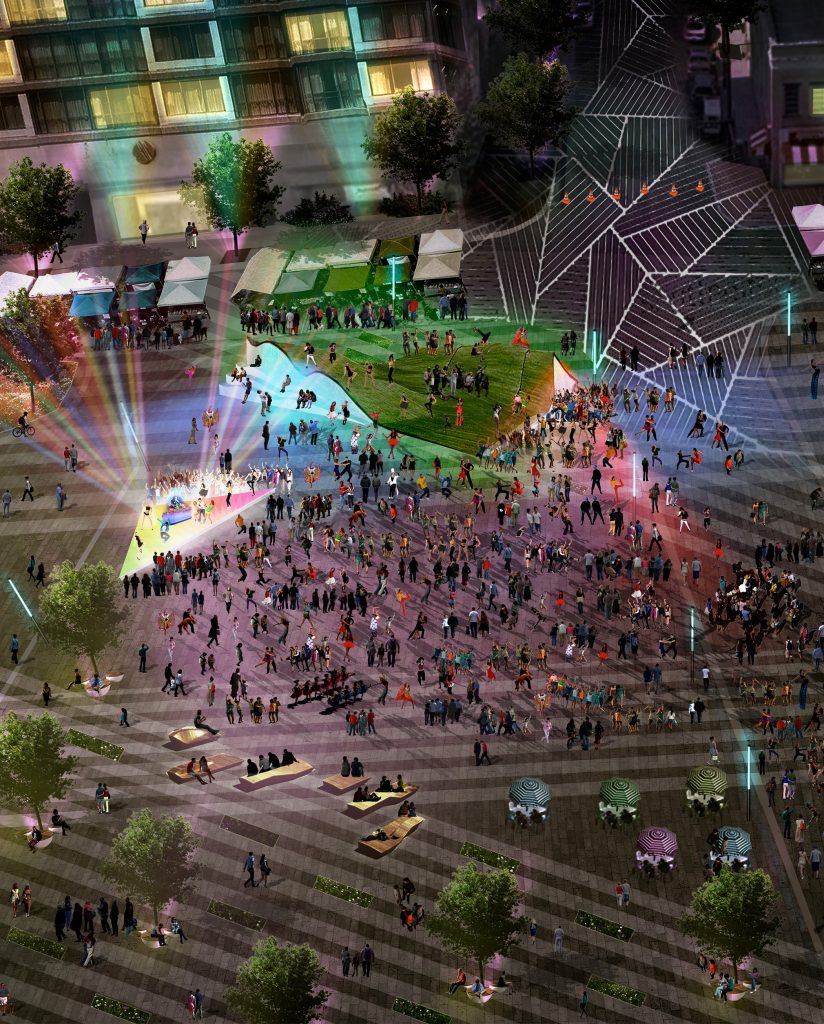
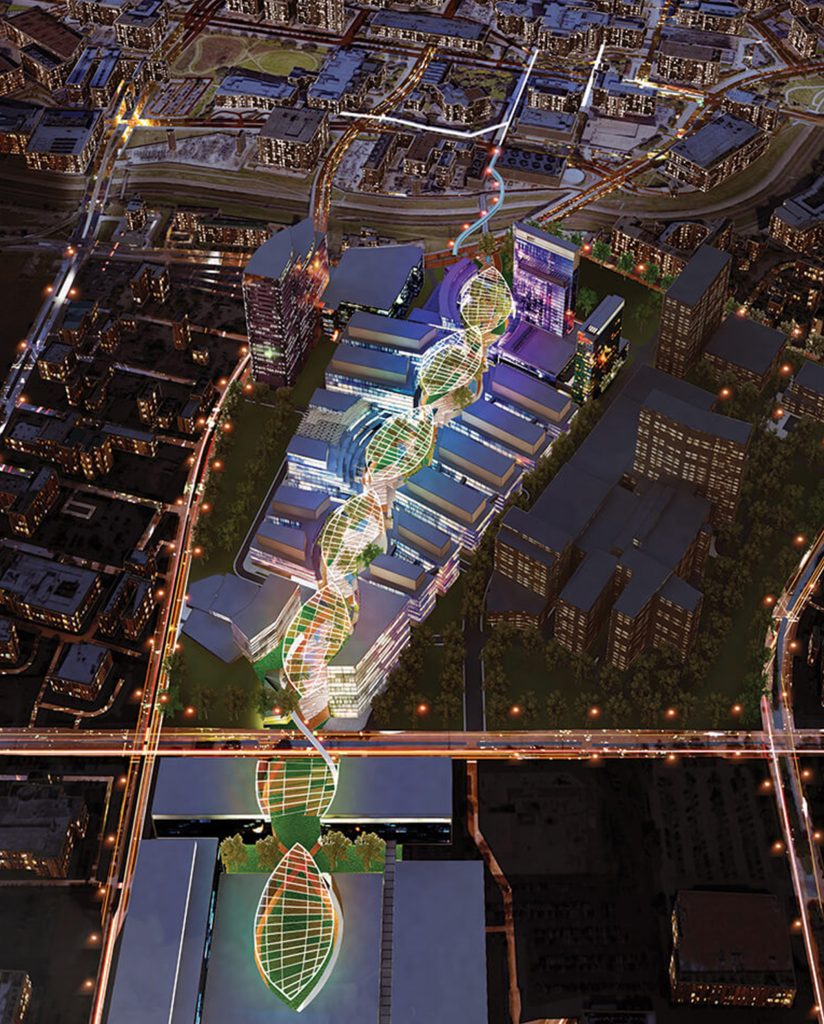
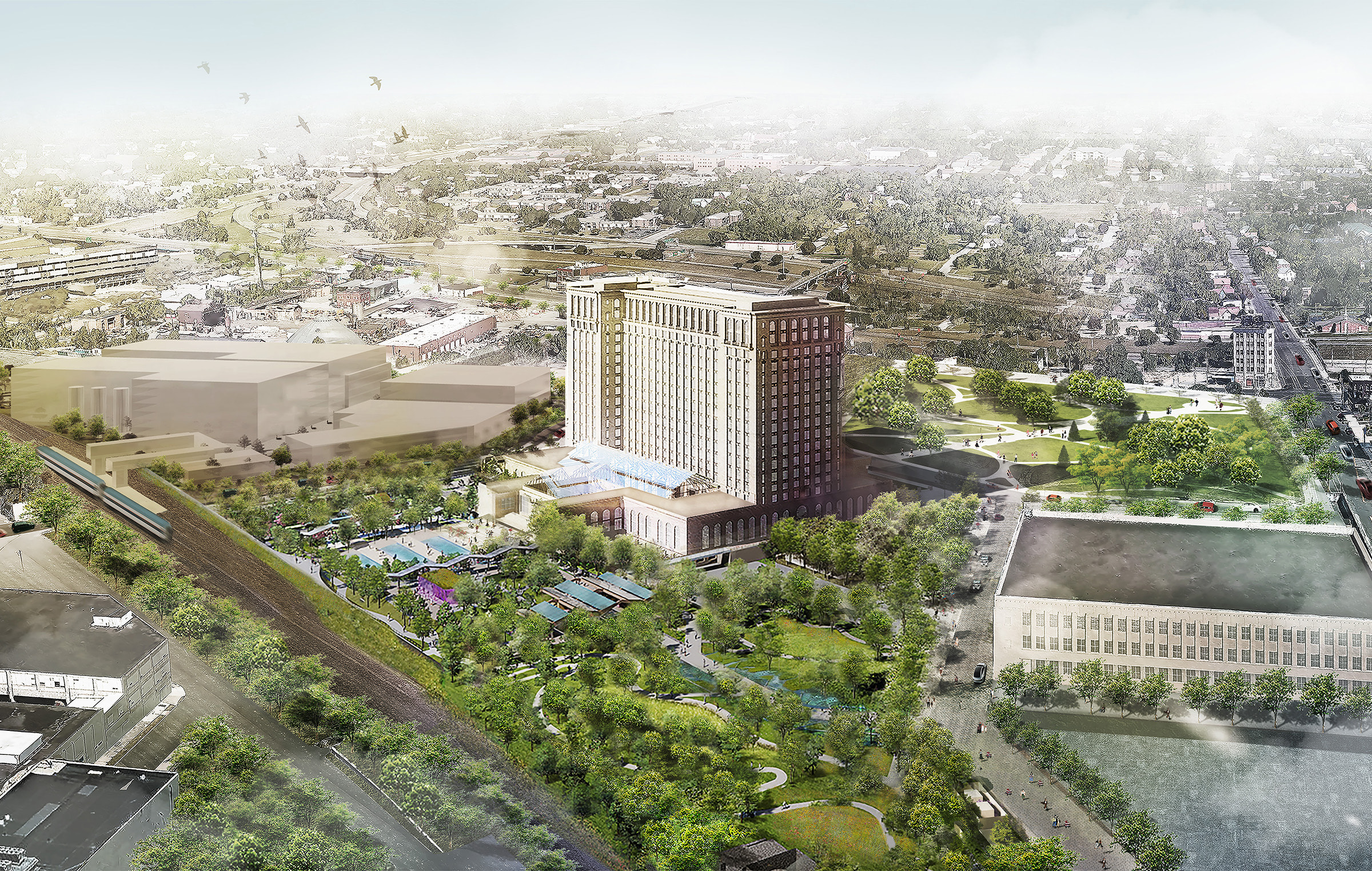
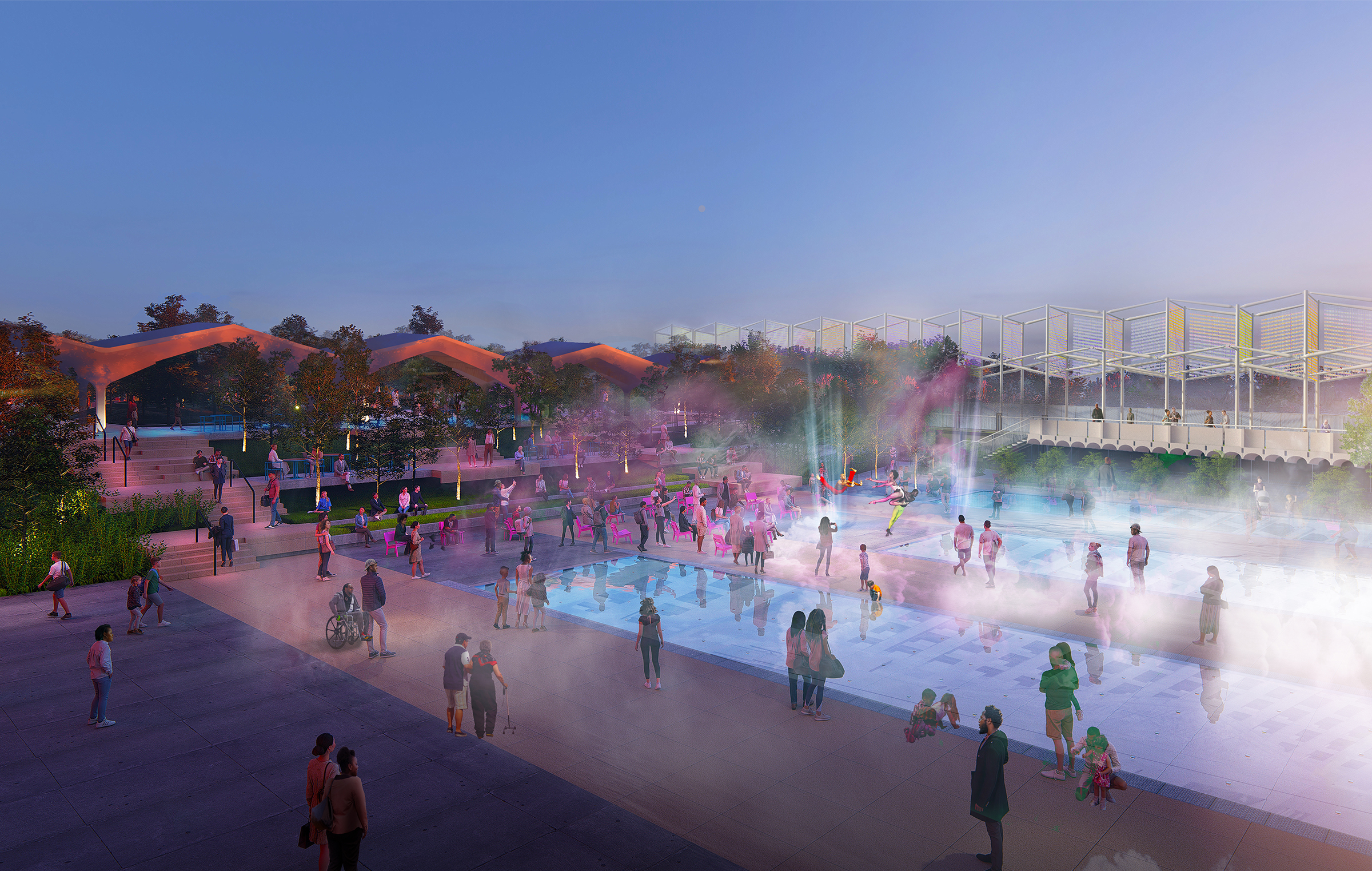
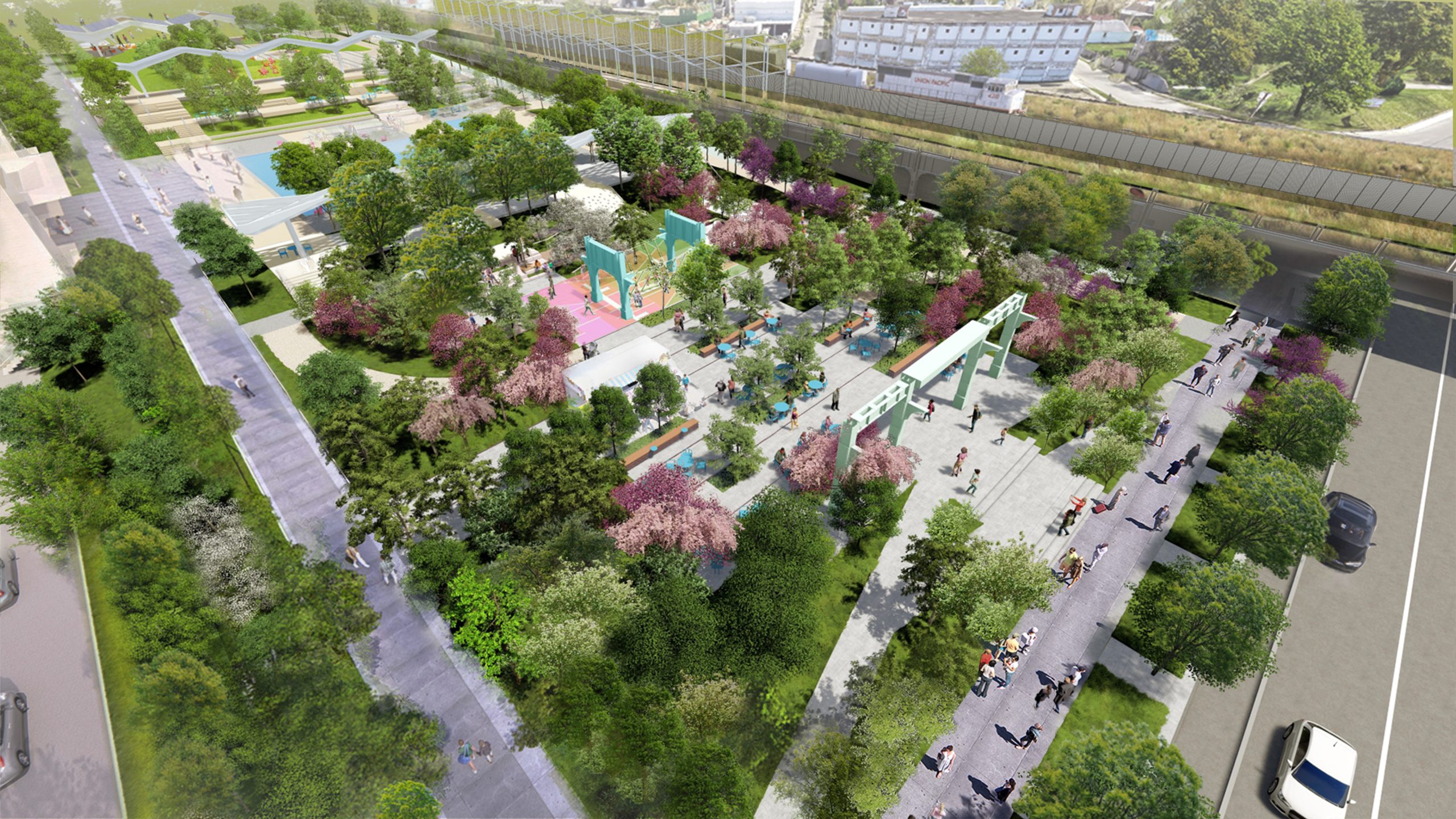
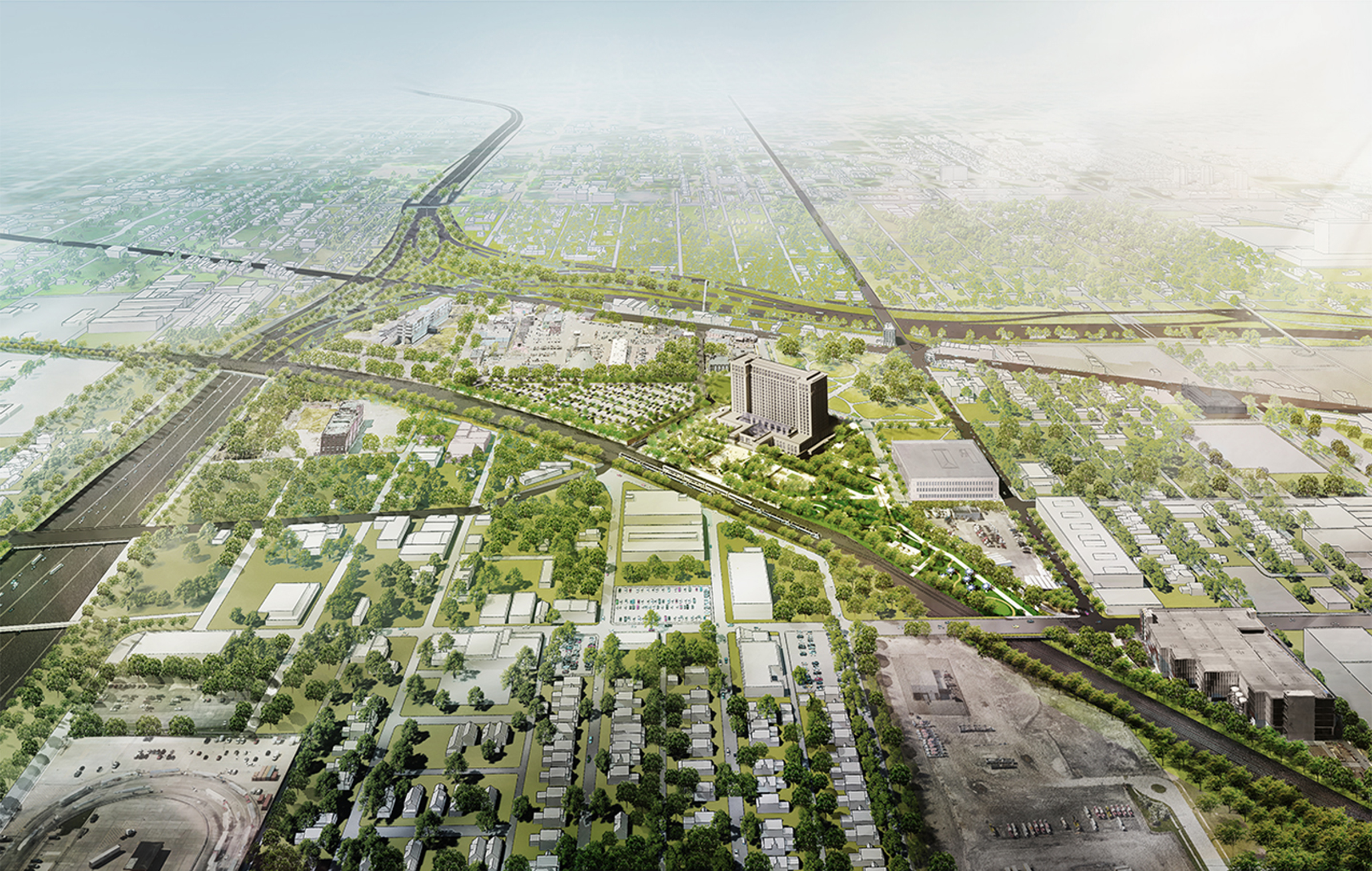
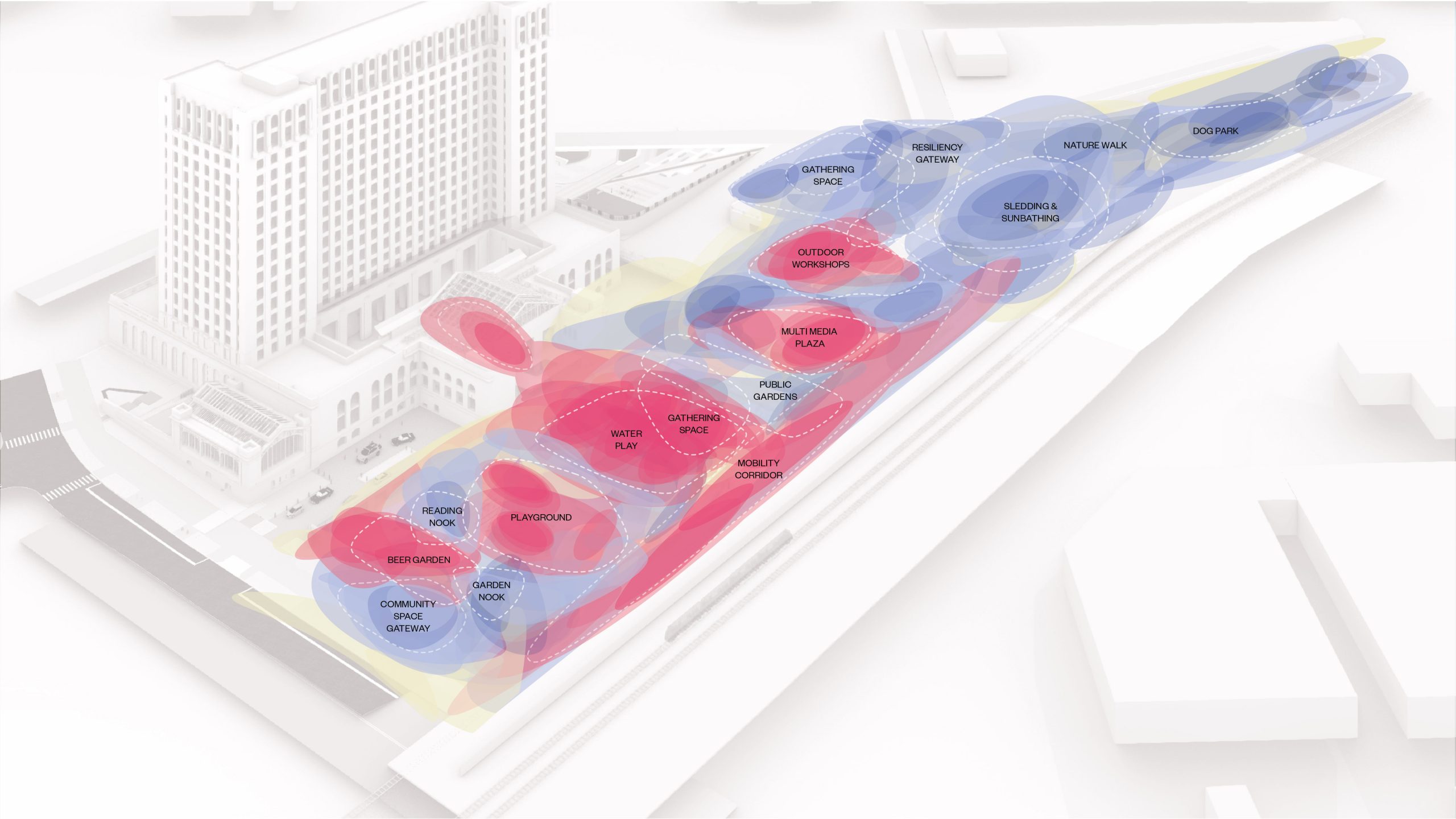
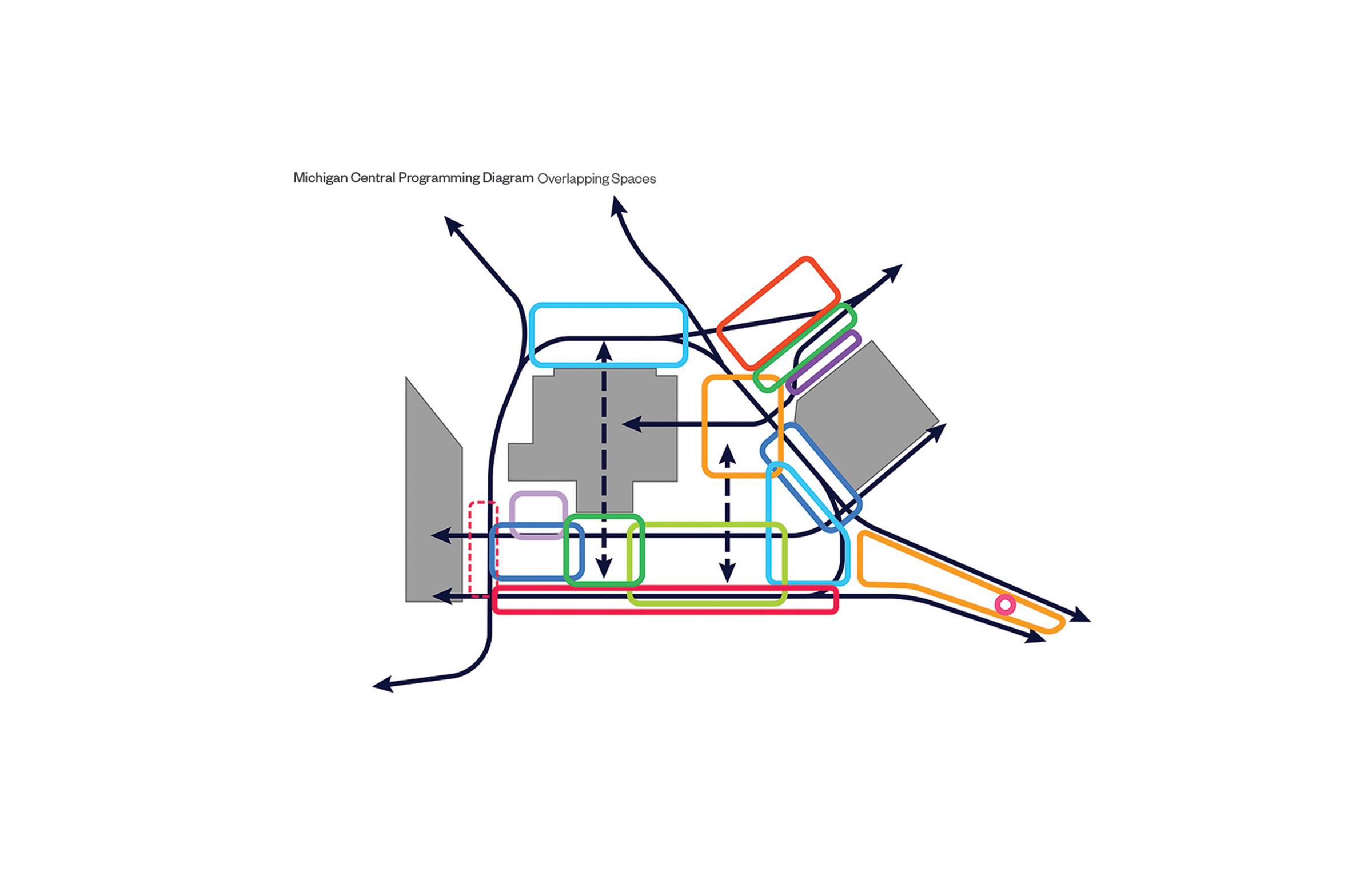
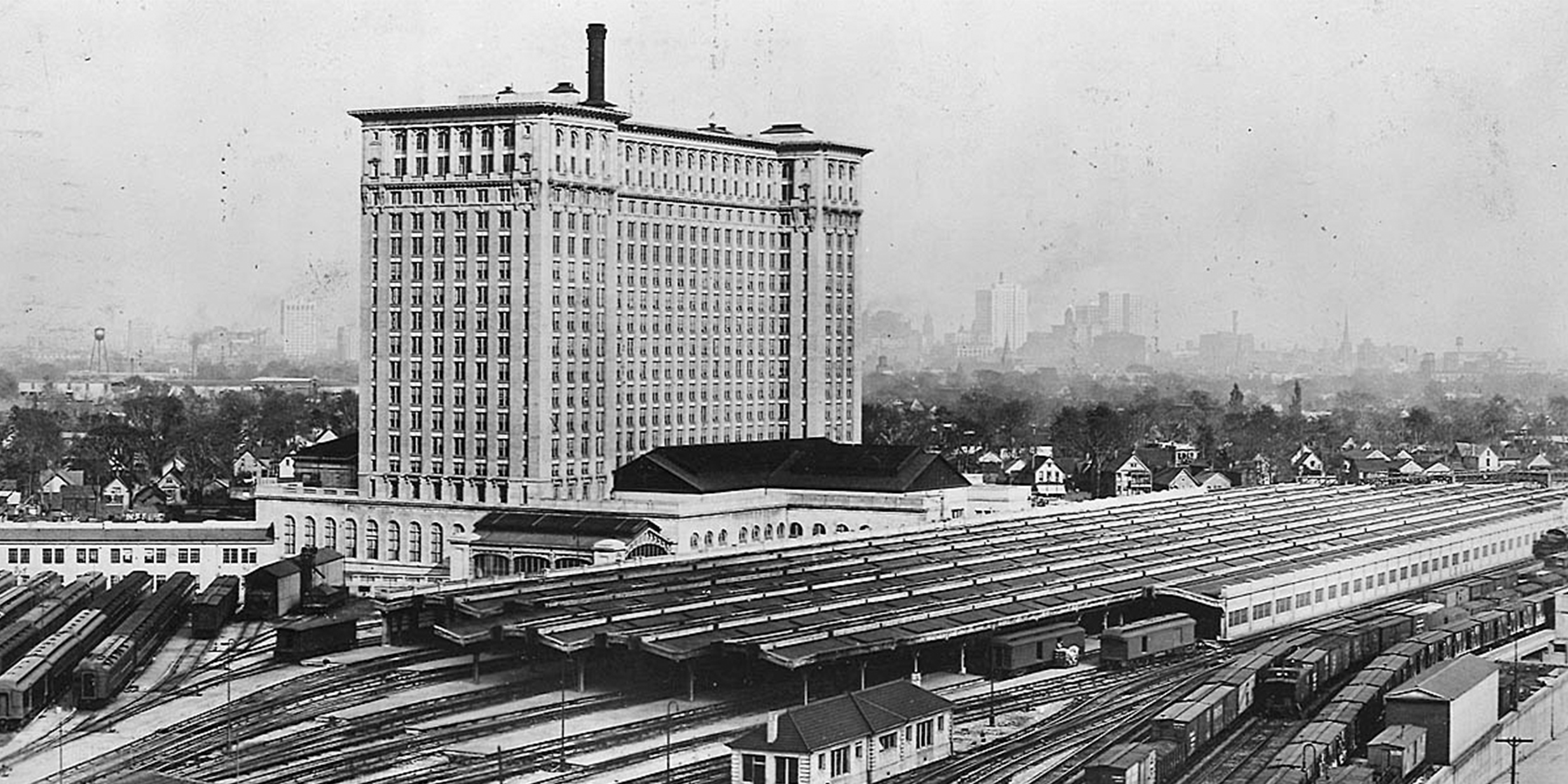
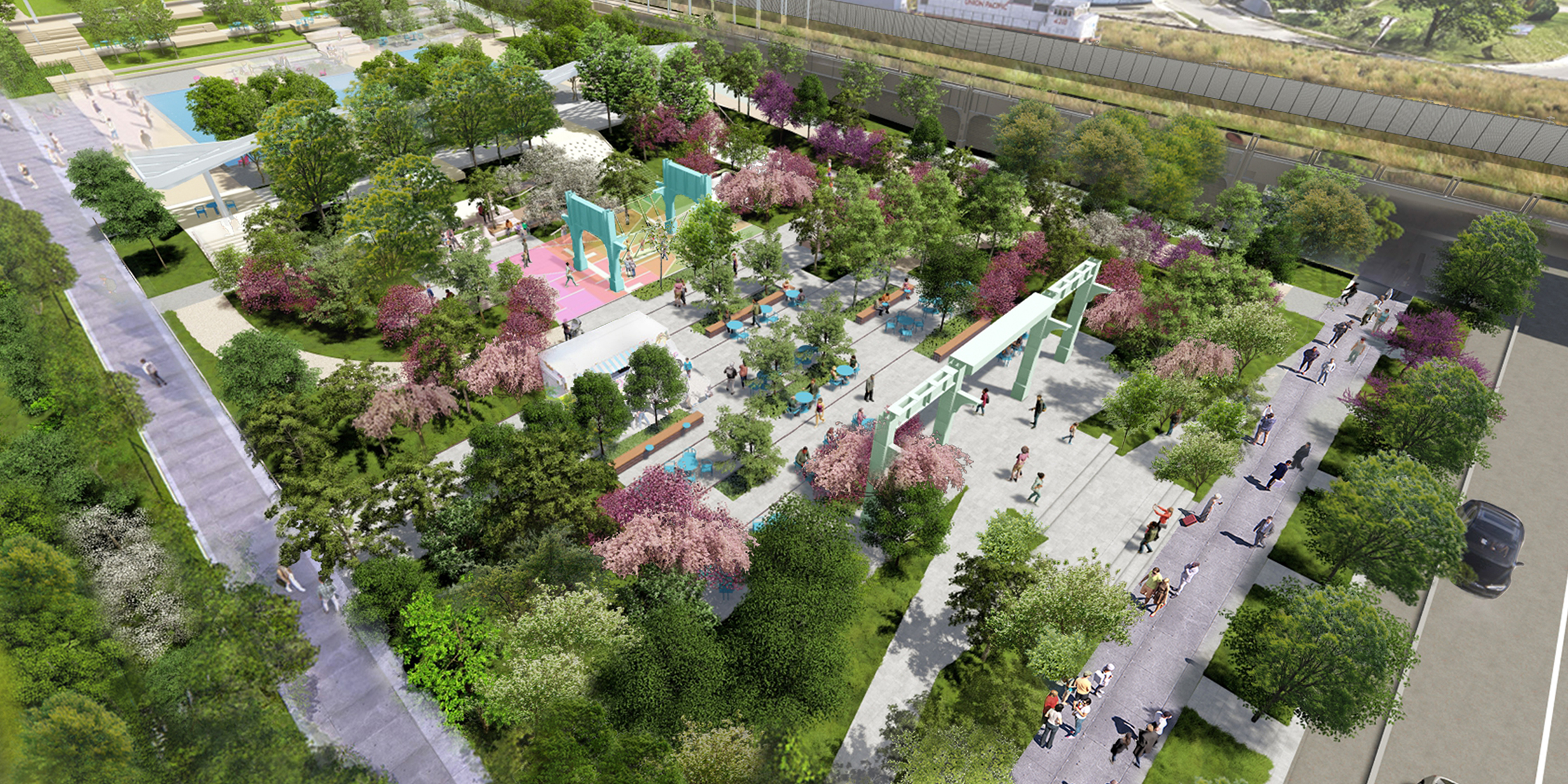
Ford’s Michigan Central Development in Detroit is a comprehensive plan that transforms this 21-acre historic train station into a resilient mobility hub. This adaptive reuse project honors Detroit’s industrial legacy, while setting the stage for the future of mobility. Once the station’s historic train shed, the Mobility Platform will offer unparalleled opportunities to observe and engage in the district’s state of the art testing and innovation. Smart sustainability measures are woven throughout the public spaces, including dynamic green storm water management systems and a collection of distributed energy generating interventions. Gateways connecting the district to the Corktown and Mexicantown neighborhoods. The park integrates over 400 new native trees to create a lush green civic space that provides refuge and inspiration for Detroit residents and visitors.
News
- Harvard Magazine: “Restored to Nature: Mikyoung Kim’s Healing Arts”
- New York Times: “52 Places to go in 2025”
- The Architect’s Newspaper: “…Station [Restored] to Original Glory”
- REJournals: “Ford Building on the Past, Crafting a New Future”
- Detroit Business Journal: “Ford Announces 8-Acre Park and Tech Zones”
Client : Ford Motor Company
Architect : Quinn Evans
Local LA : Giffels Webster
Photo : Ryan Southen
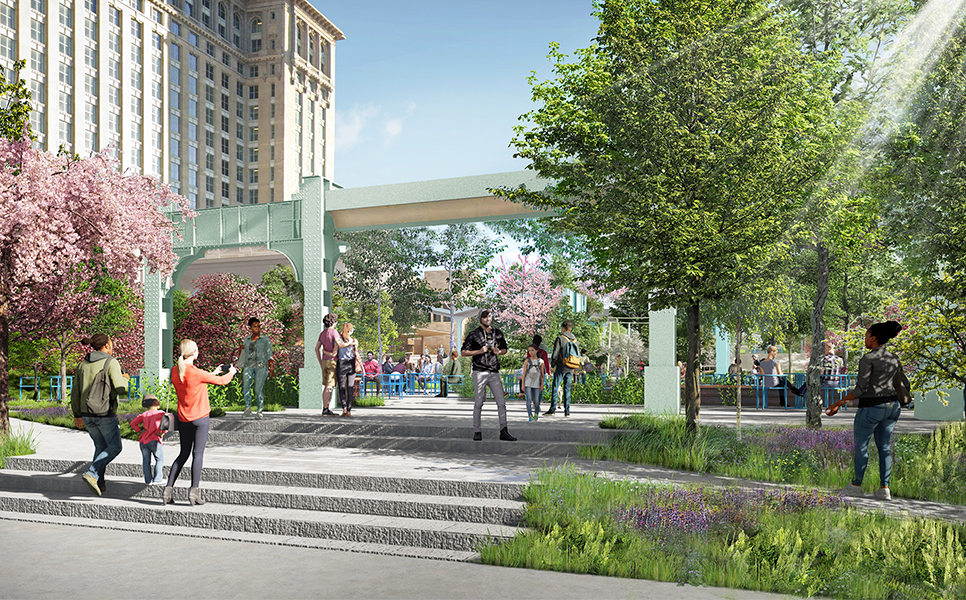
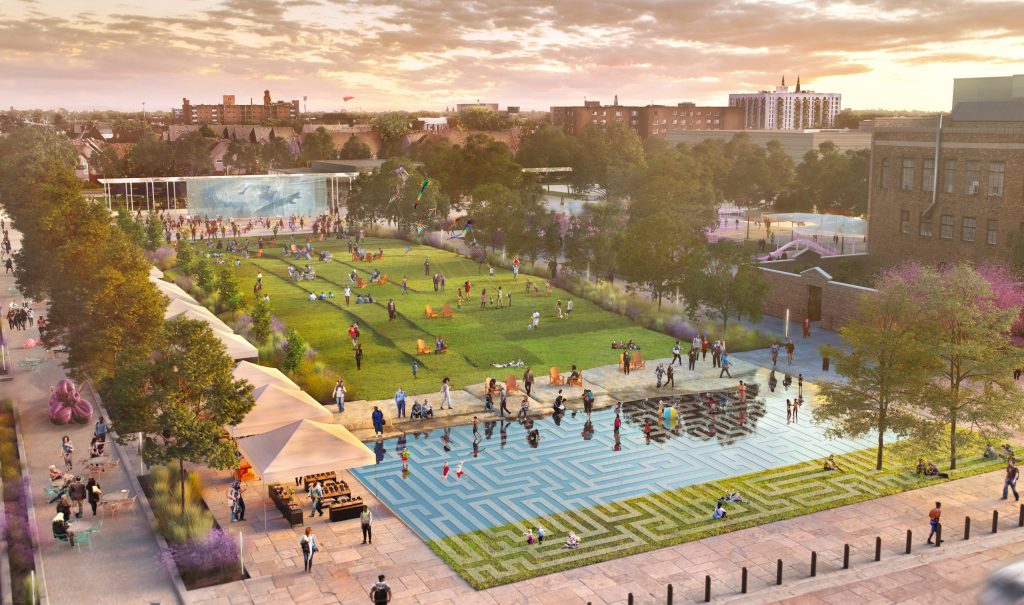
In the early twentieth century this train station was a hub of activity and a place of innovation and engagement. Today, the park foregrounds clean energy showcasing the positive impacts of zero emission renewable energy driven public space design. Through strategic investments in solar and wind energy, Ford aims to close the energy consumption loop across this 14-acre site, setting a new standard for sustainable civic parks.
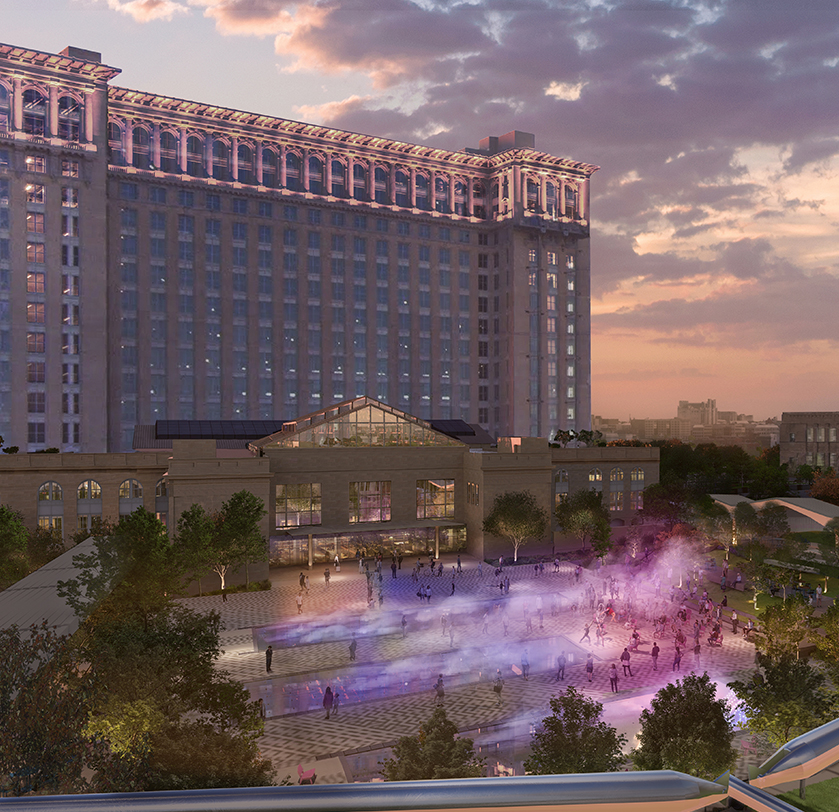
Over 550 new trees and more than 2-acres of green stormwater infrastructure are integrated into this plan, contributing to biodiversity and enhancing environmental quality in the city. This project exemplifies how cities can reimagine industrial sites to create healthier, more resilient communities for all.
Process

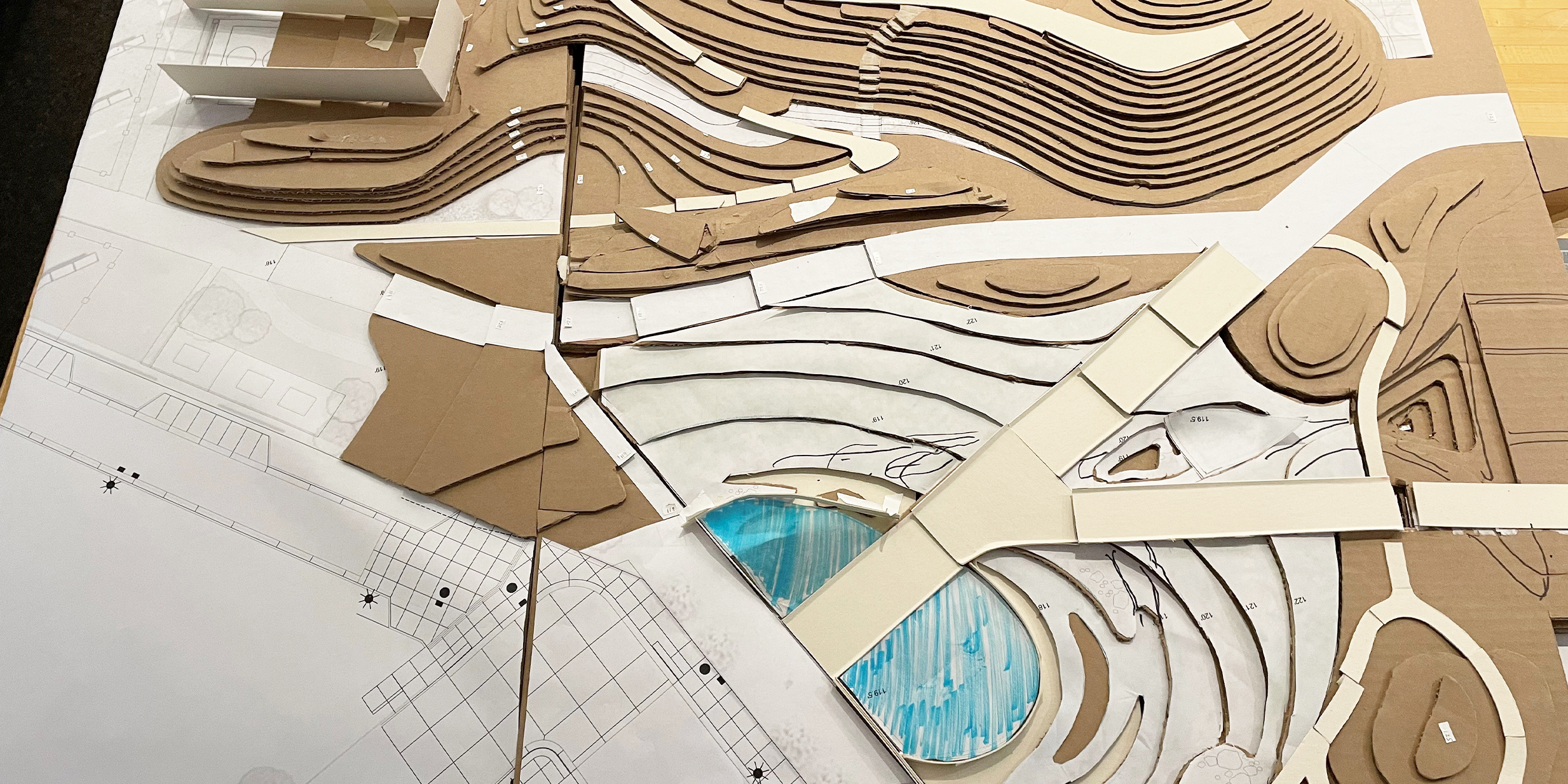
Studies of the history of the train station with noise and neurodiversity research.
Studies of the history of the train station with noise and neurodiversity research.