The Cheonggye River
Seoul, Korea
Seoul, Korea
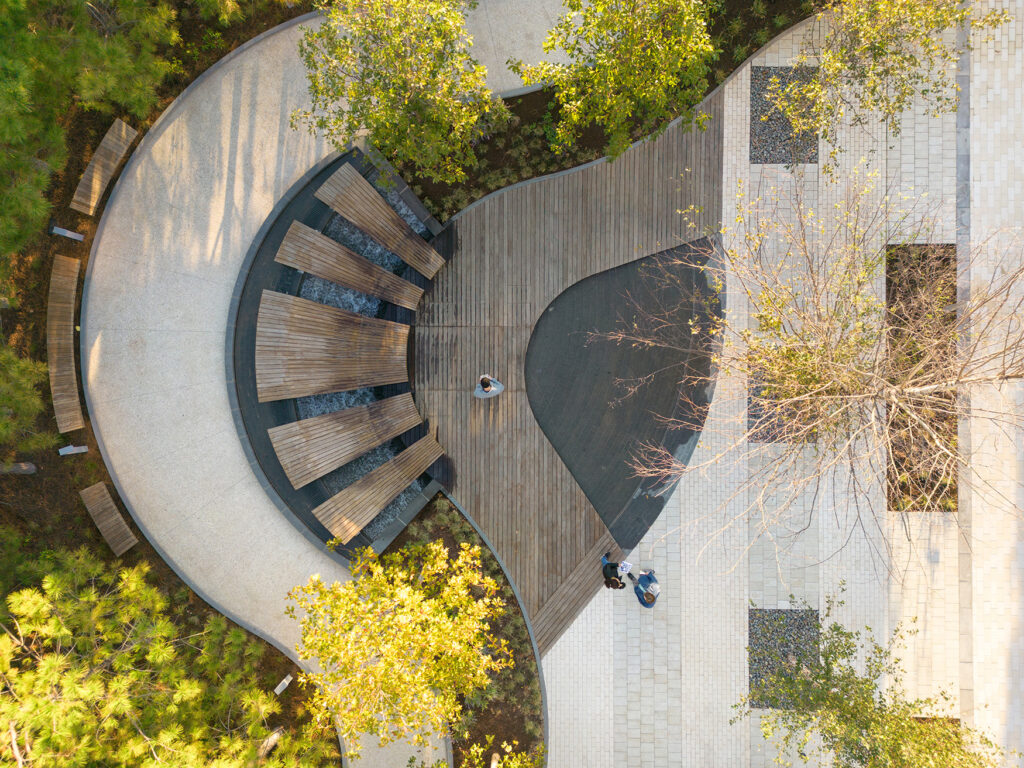
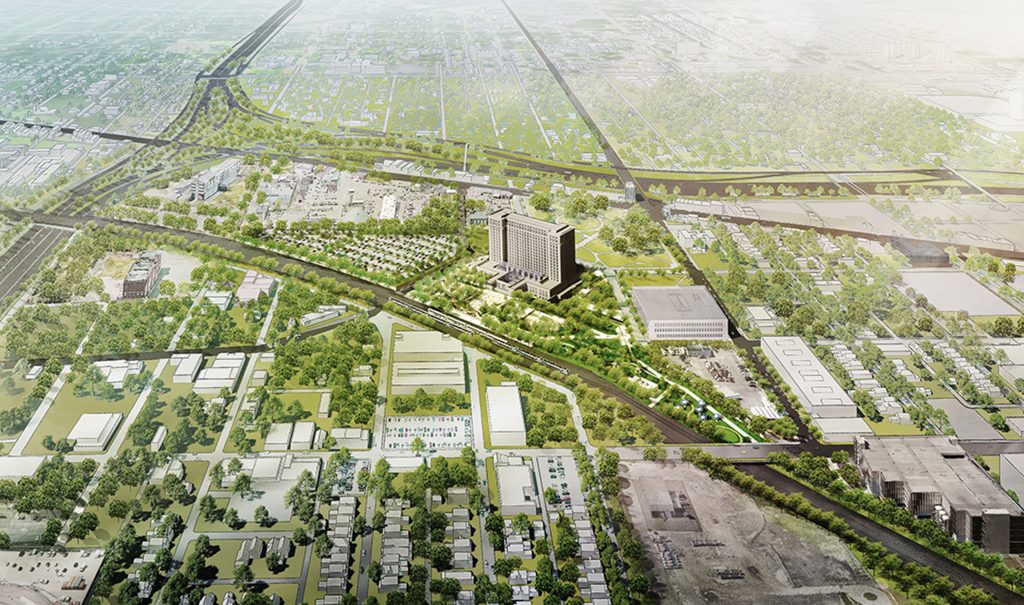
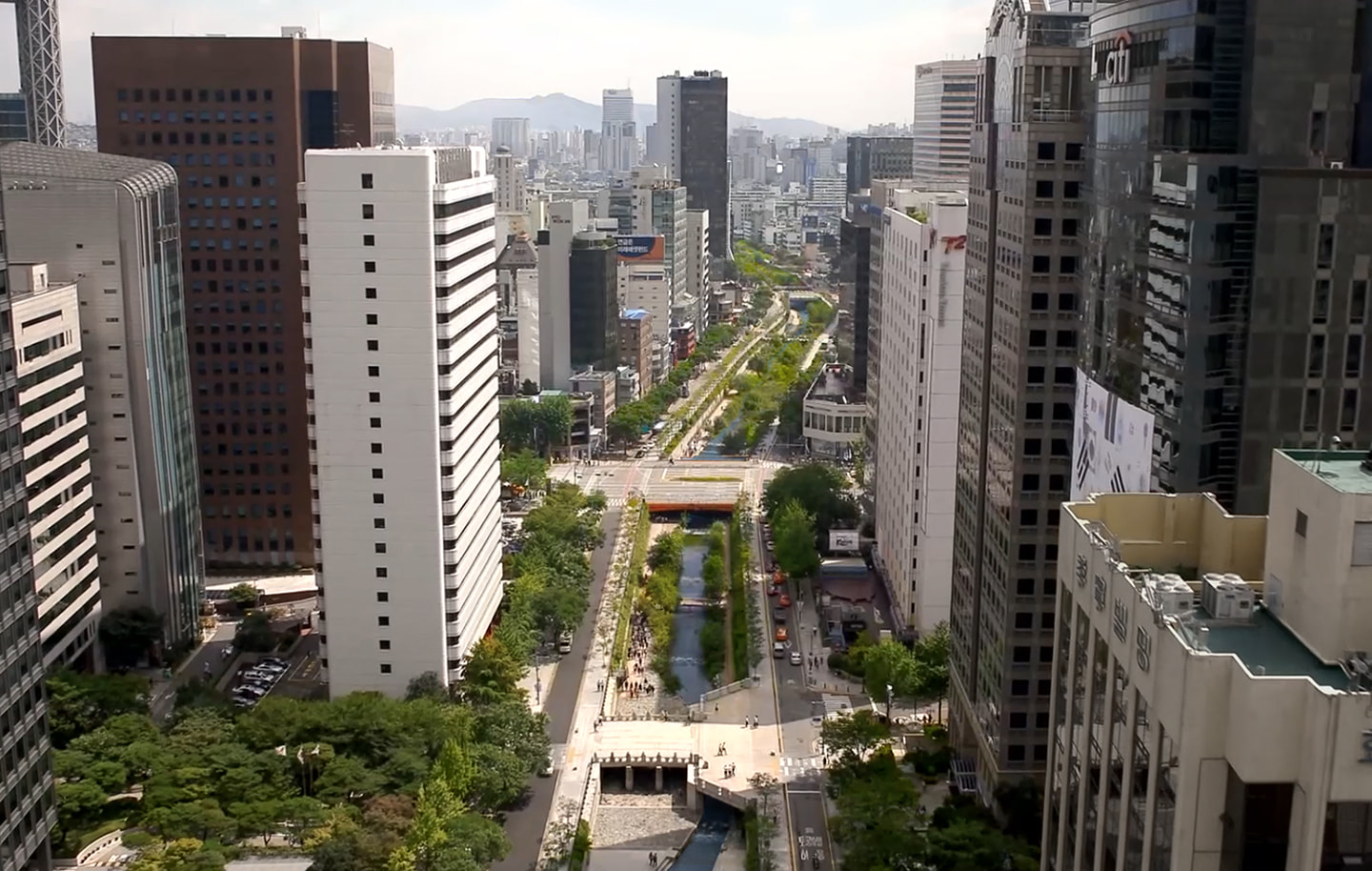
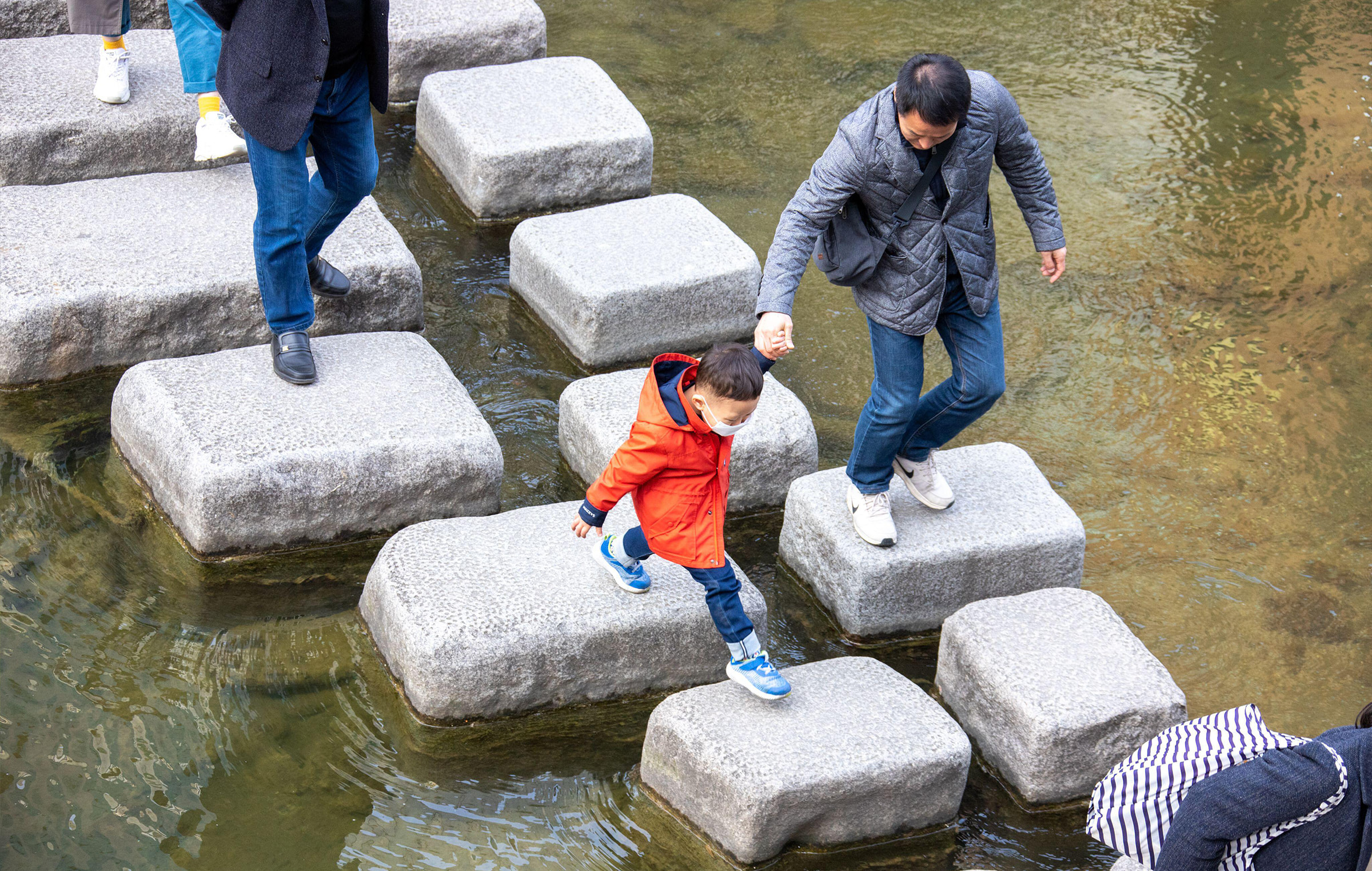
The Cheonggye Restoration Project is a transformative seven-mile blue-green linear greenway that redefines urban living in the heart of the city. By removing and realigning a major arterial highway, this initiative has unveiled the historic Cheonggyecheon Stream. While this project daylighted this historic waterway, it also implemented a sophisticated stormwater management system capable of handling up to 260,000 tons of runoff daily, significantly enhancing the city’s resilience to flooding and climate challenges.
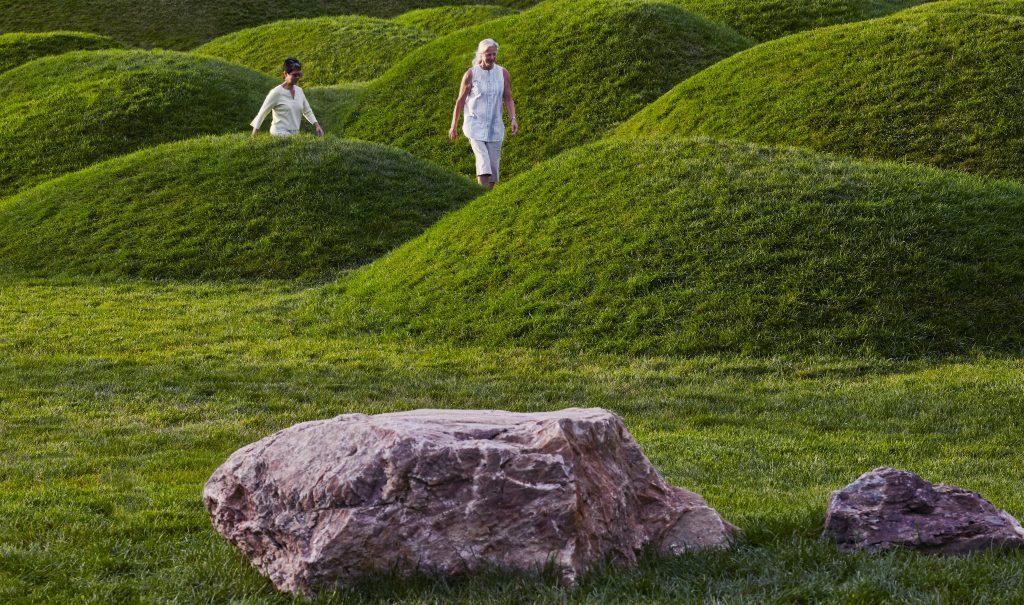
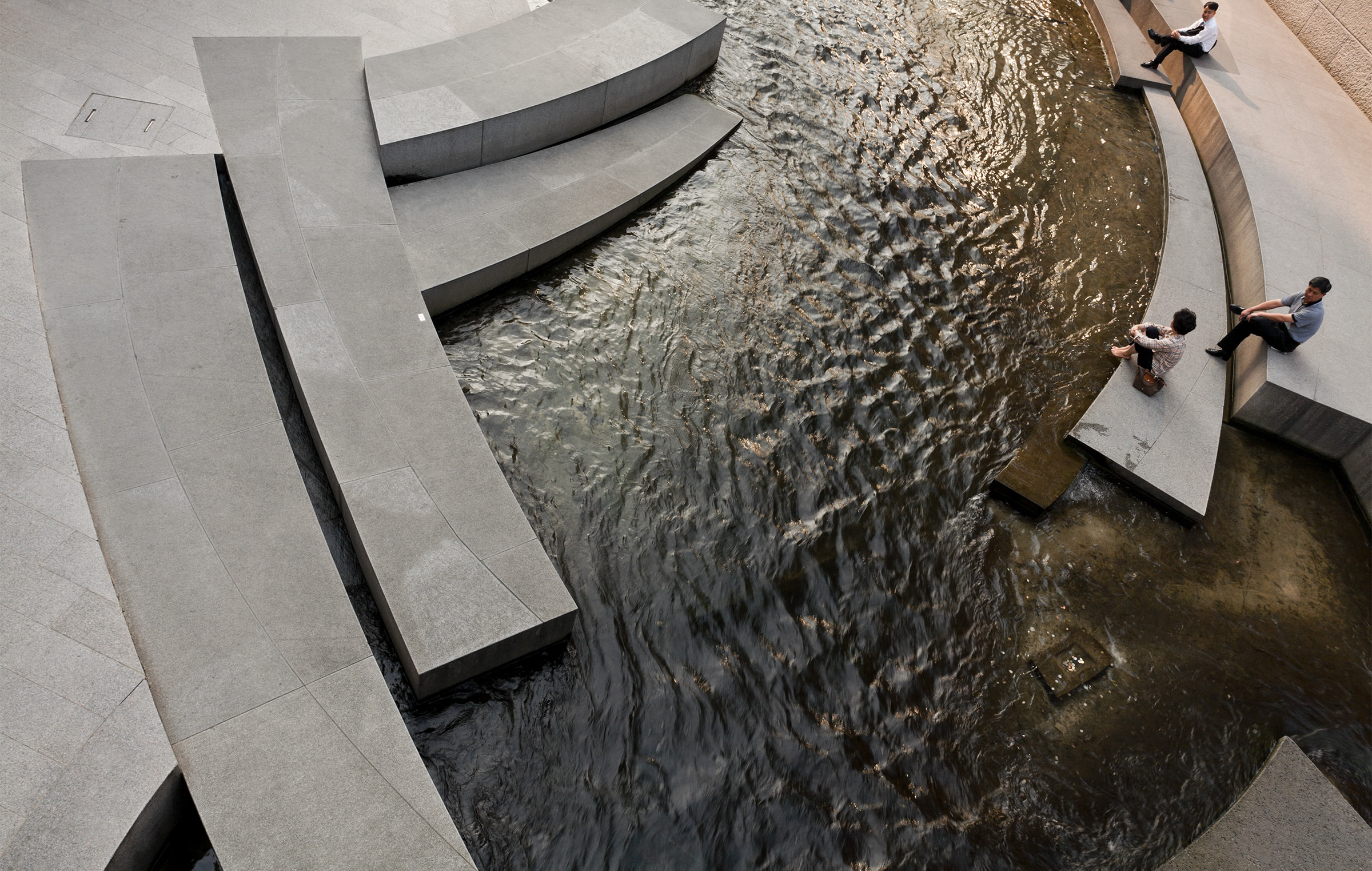
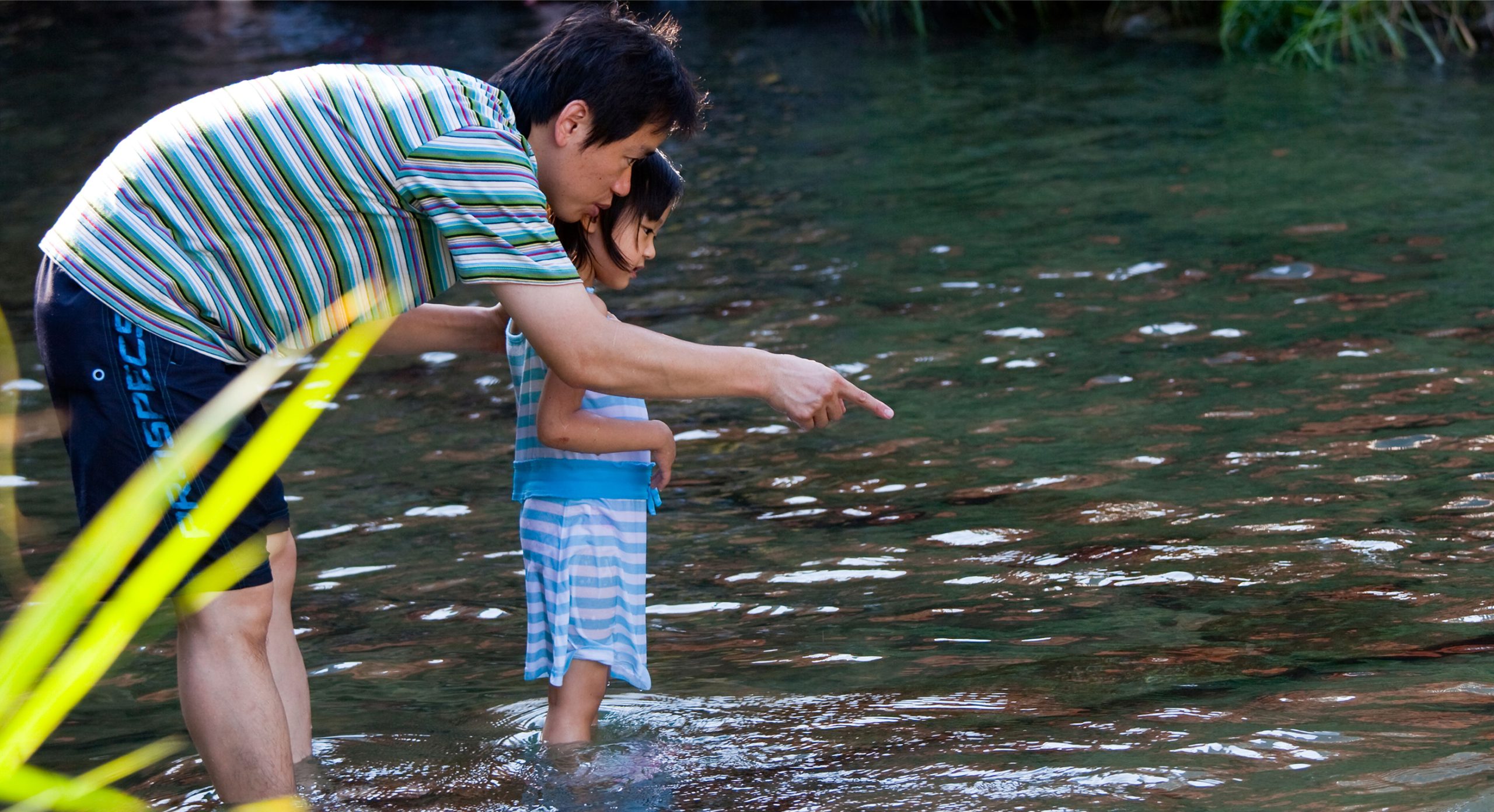
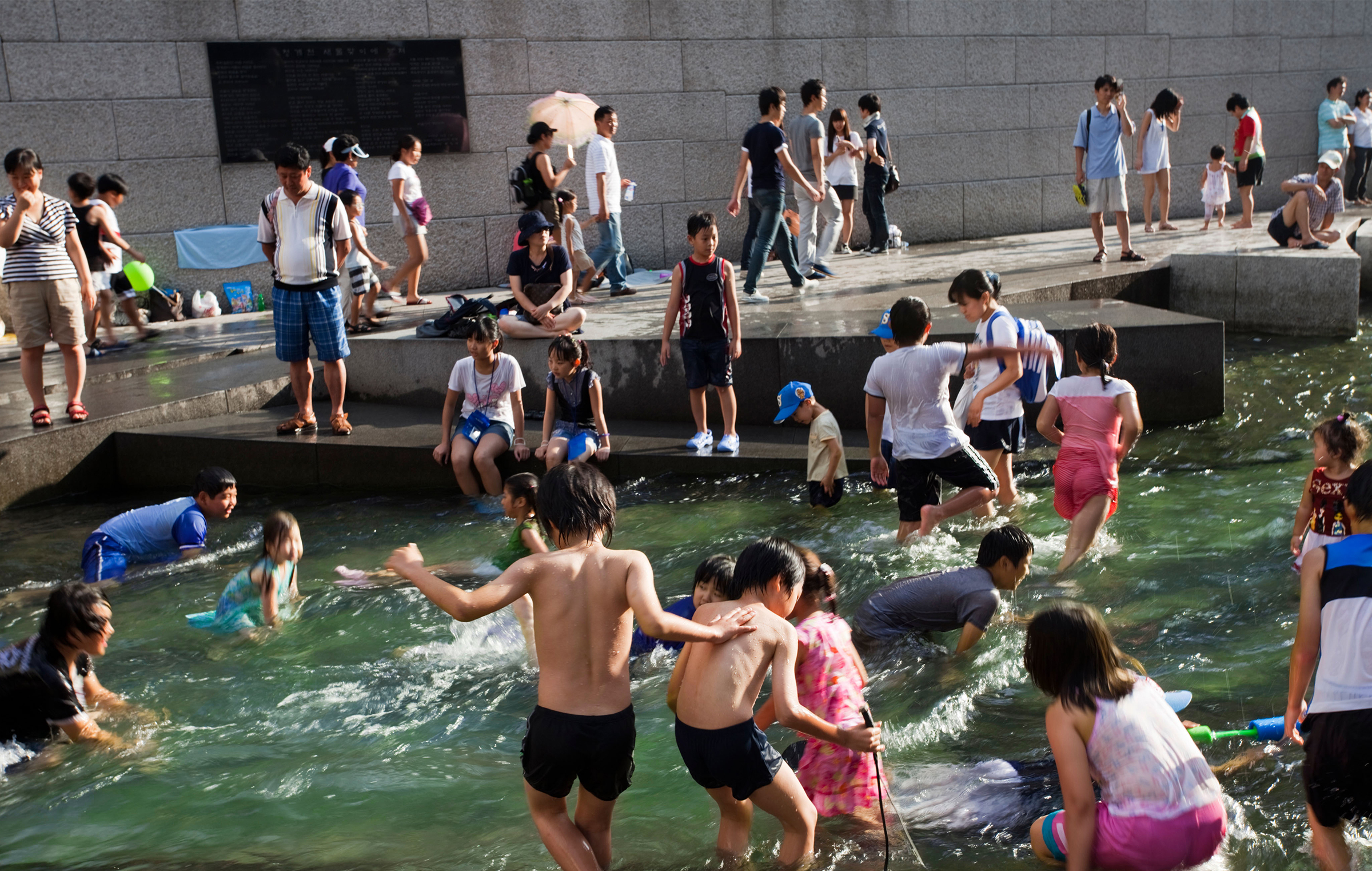
At the project’s source point park, locally quarried stone from both North and South Korea is thoughtfully integrated into the design. This feature symbolizes the unique cultural heritage of the nine provinces while representing the hopeful possibility of reunification between the two nations. As an integral part of the city’s urban landscape, this linear park attracts both locals and tourists, inviting them to relax by the stream banks and participate in a variety of civic and holiday events. Additionally, the river restoration has revitalized the local ecosystem, reintroducing native flora and fauna to this previously urbanized environment. The Cheonggye Restoration Project stands as a testament to innovative urban planning, ecological sustainability, and cultural connection.
Awards
- 1st Seoul International Design Competition Award
- Harvard University Veronica Rudge Green Prize
- Landezine
- ASLA
- Urban Waterfront Center Commission
News
- New York Times: “Peeling Back Pavement to Expose Watery Havens”
- Harvard Magazine: “Restored to Nature: Mikyoung Kim’s Healing Arts”
- The Guardian: “The Highway That Seoul Turned into a Stream”
- National Geographic: “Seoul: The Cutting-Edge of Cool in South Korea”
- The Guardian: “Story of Cities #50”
- LAND8: “…Auto-Centric Zone into a Pedestrian Haven”
- INHABITAT: “How Cheonggye…Restored the Green Heart of Seoul”
- Seeds of Good Anthropocene’s: “Restoration of Cheonggyecheon River”
Client : Seoul Metropolitan Government
Photo : Taeoh Kim, Robert Such
Local Partner : SeoAhn Total Landscape
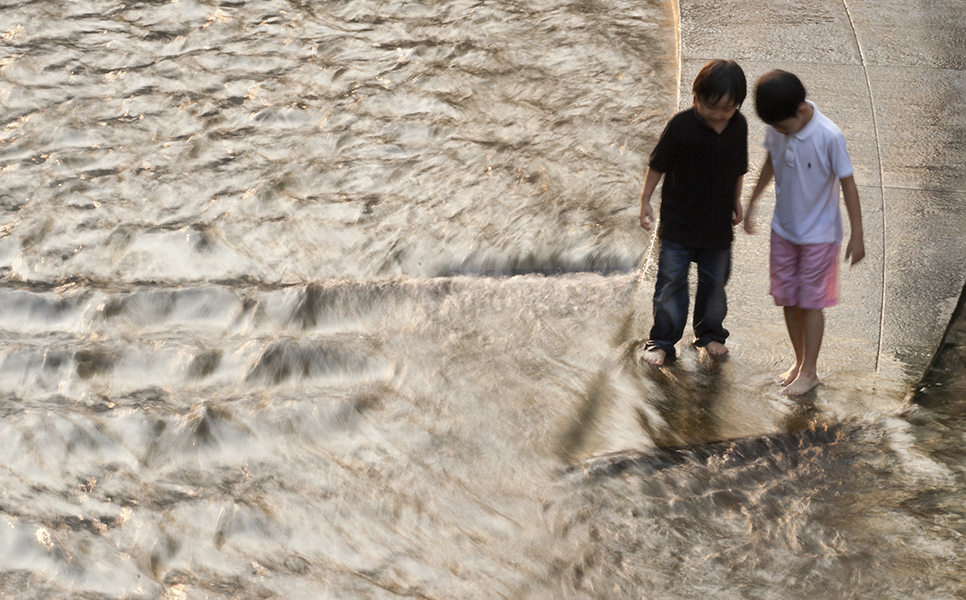
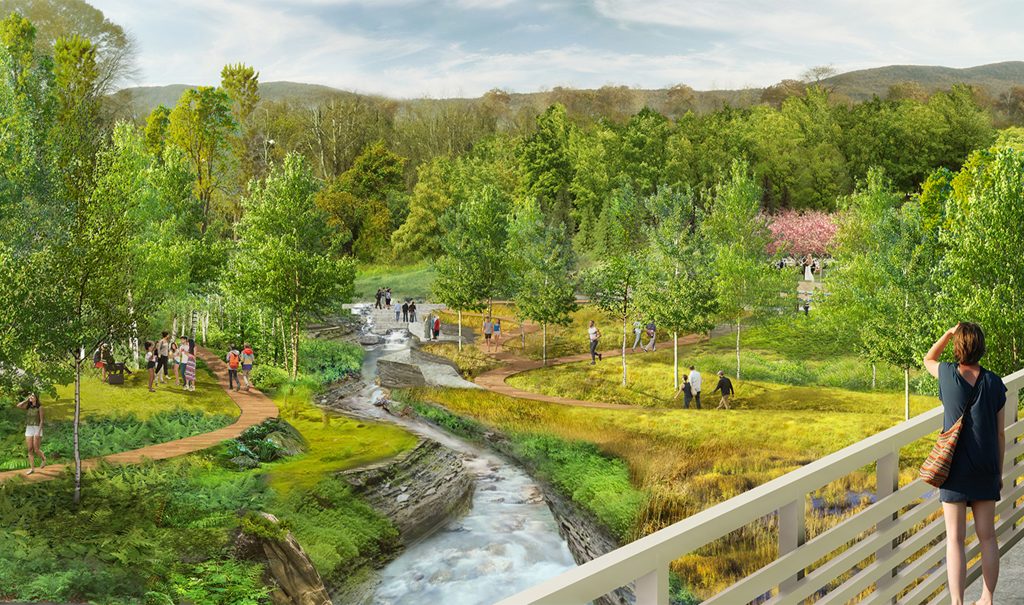
The design was guided by water collection levels from hour to hour and season to season while addressing the catastrophic flooding that occurs during intense Monsoon storms. The project has effectively decreased air pollution and heat island effects and introduced over 260 new species of birds and fish.
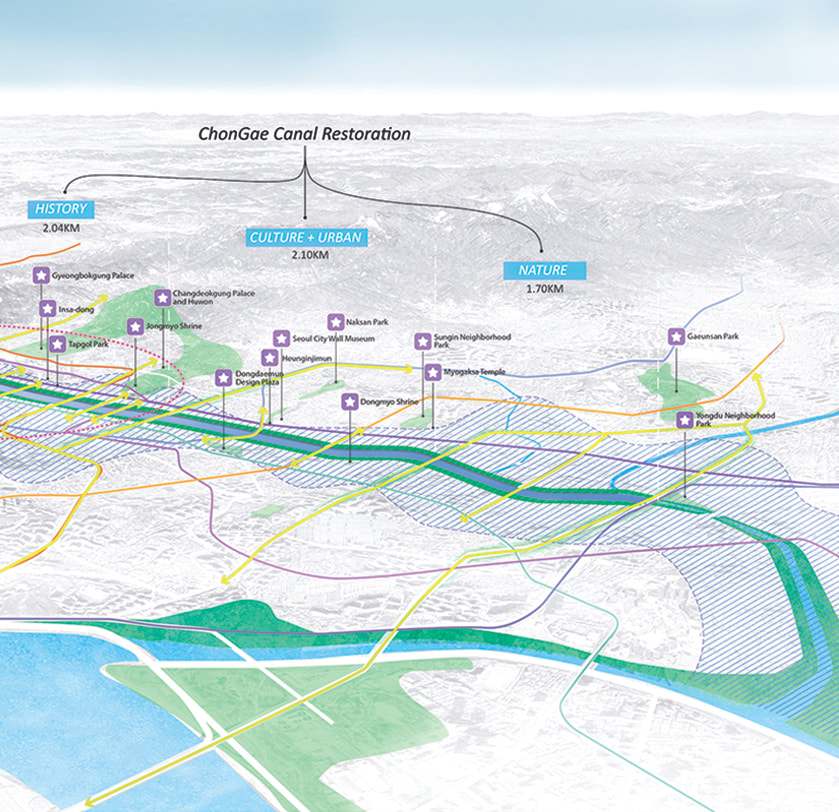
The greenway serves multiple ecological and environmental functions, reducing urban heat by 4.5°C, lowering air pollution by 35%, and enhancing biodiversity by attracting fish, birds, and increasing plant species. The project also reduces the city's carbon footprint by removing 170,000 cars and improving public transportation options. During the monsoon season, the greenway becomes a massive stormwater retention basin, managing over 260,000 tons of runoff daily, and protecting the city from storm surges.
Process

With this resiliency study, this greenway transforms throughout the seasons.
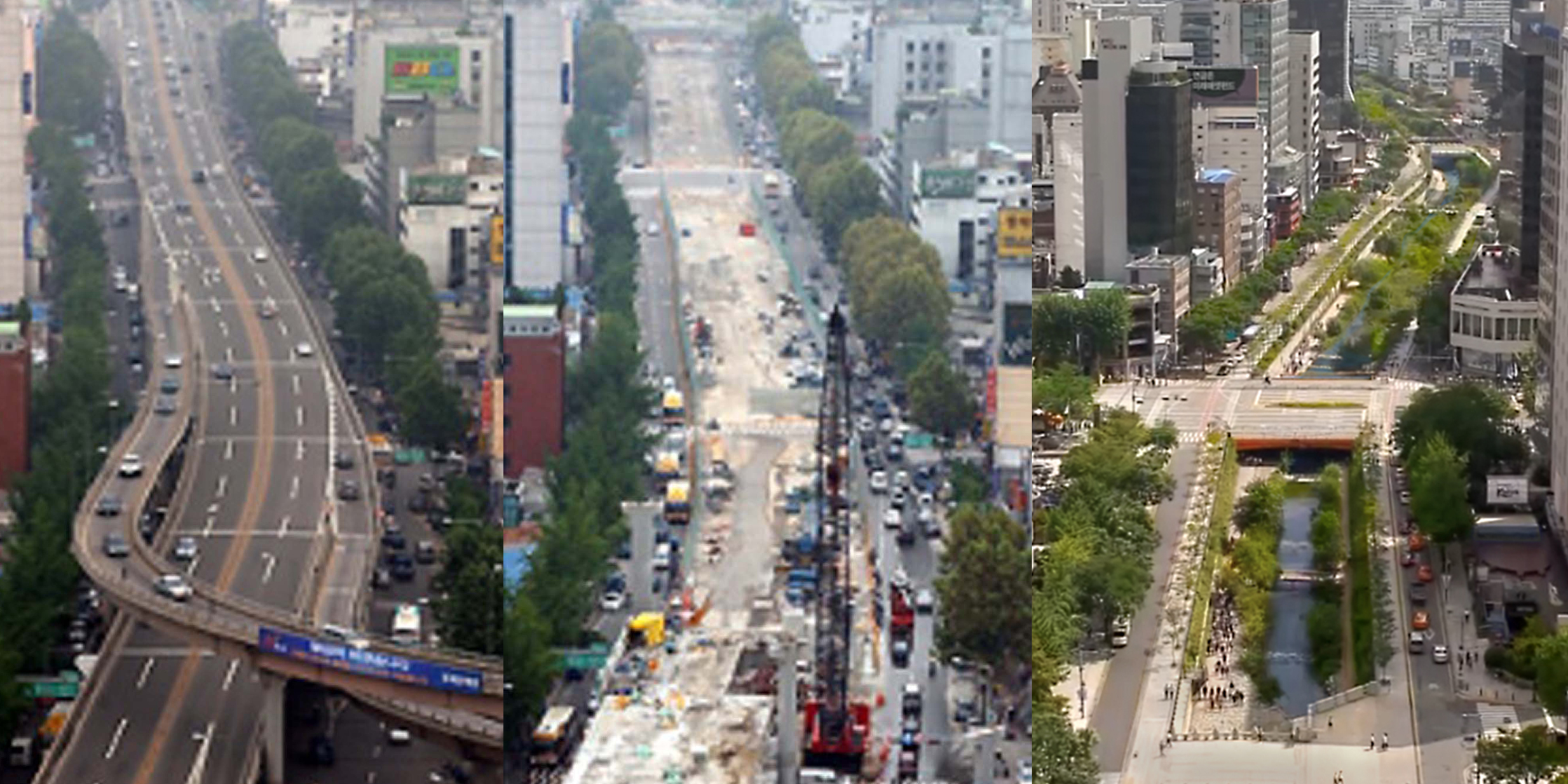
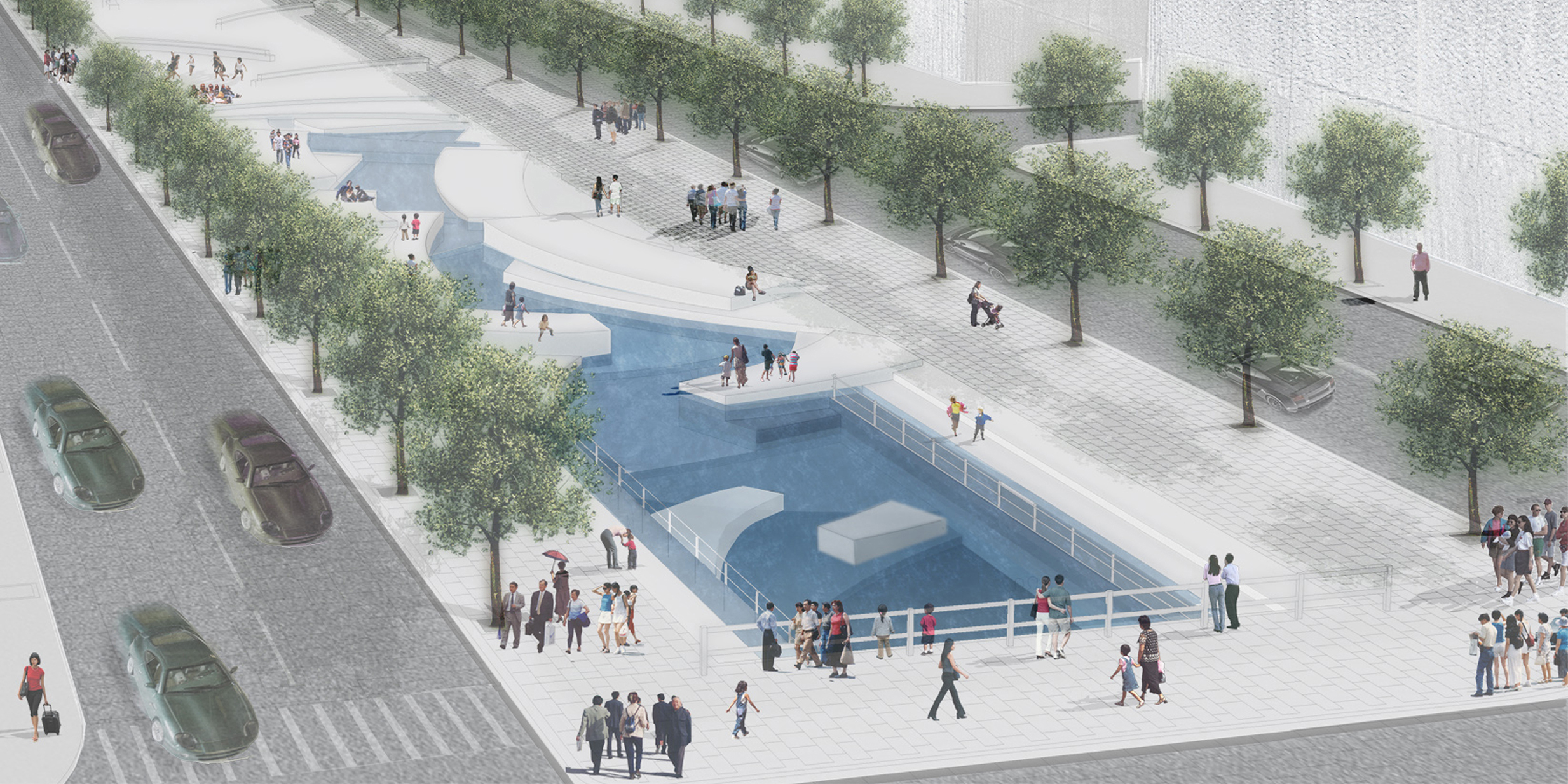
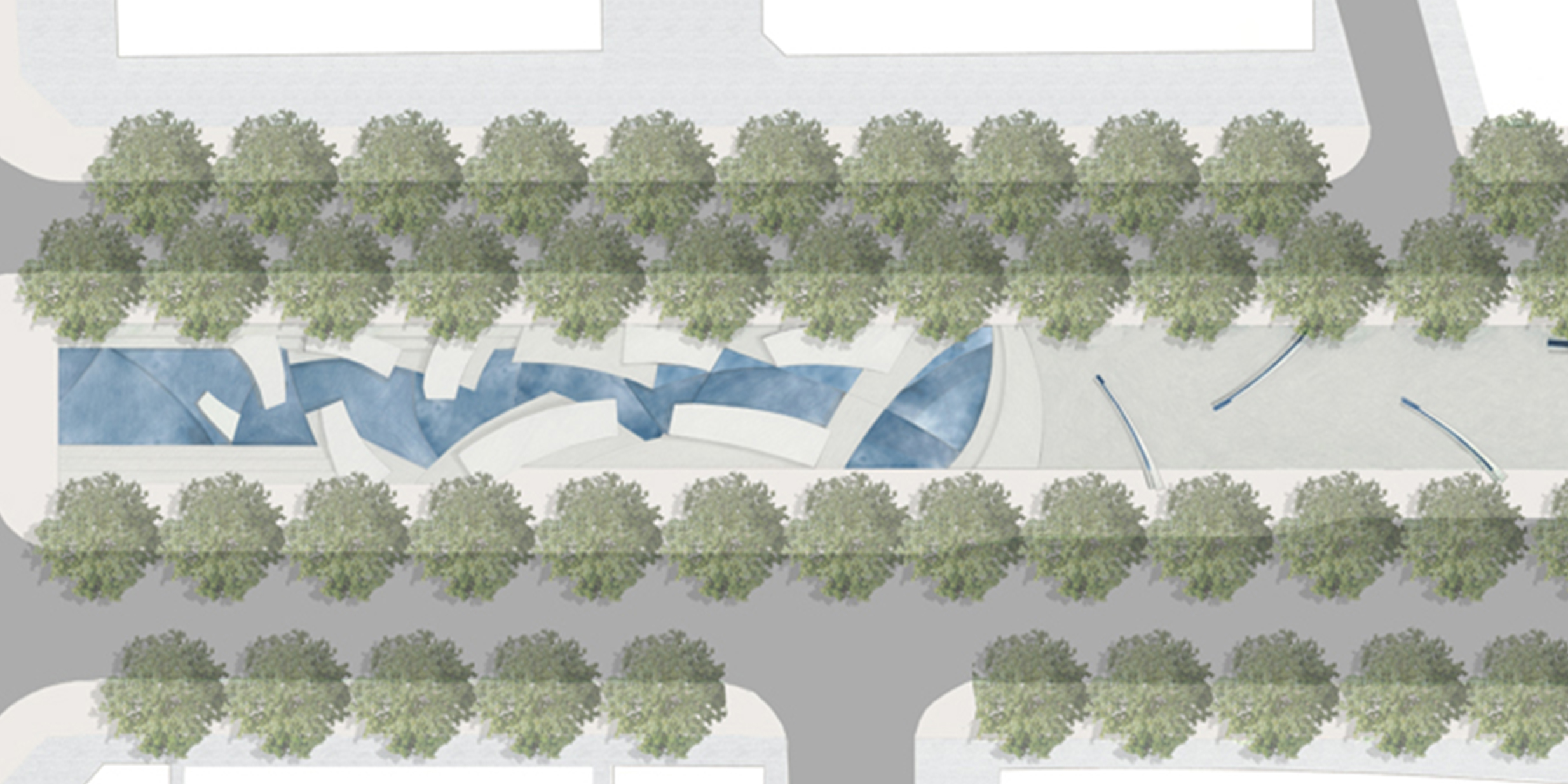
With this resiliency study, this greenway transforms throughout the seasons.