From Tracks to New Foundations
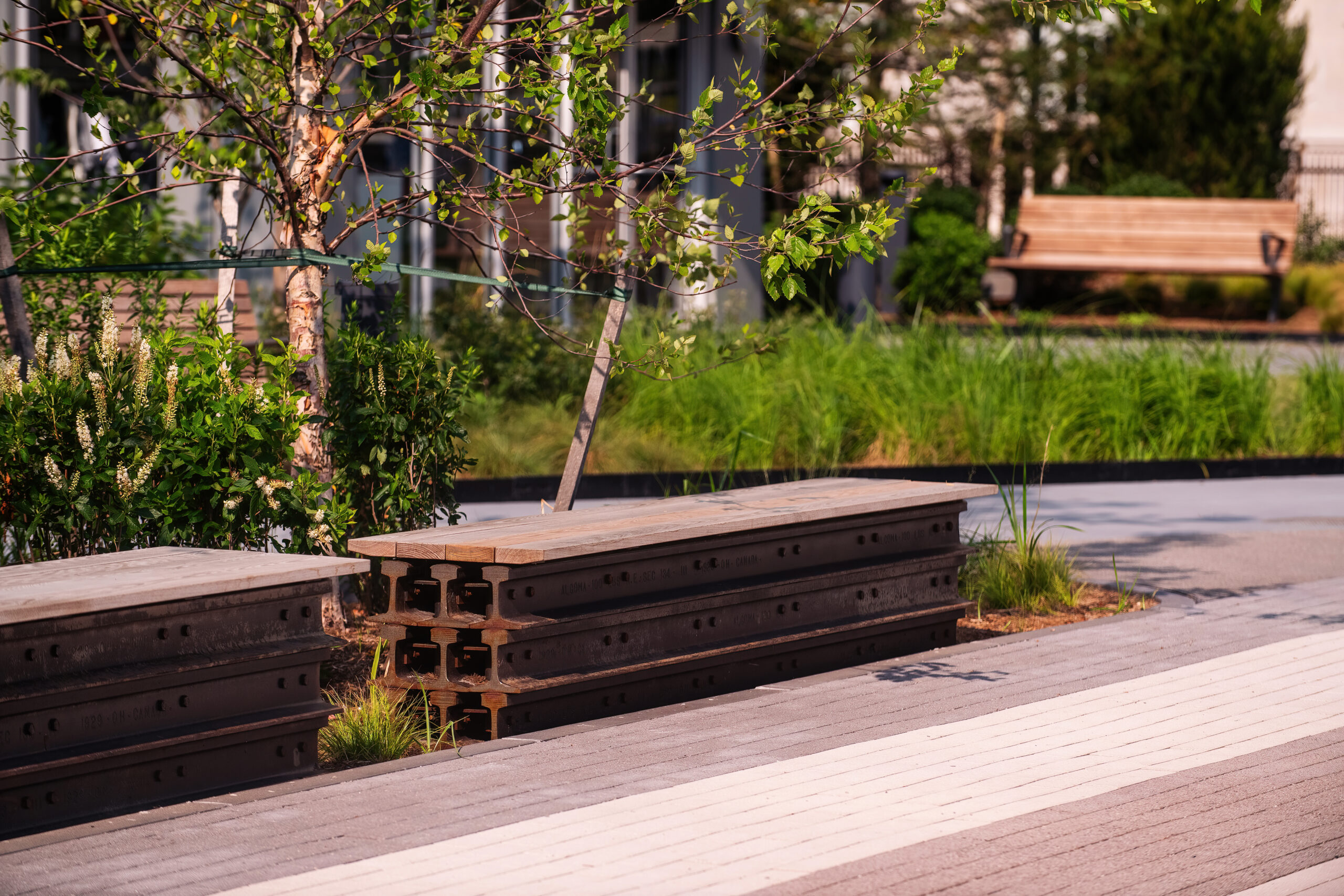
At Ford’s Michigan Central Park, material is not simply reused, it is re-narrated. More than 1,000 linear feet of rails removed during demolition were salvaged, sorted, and reintroduced into the public realm as benches and fences. Instead of referencing the past symbolically, the landscape physically carries it.
Rail steel is a material defined by movement. It holds the weight of departures and arrivals, daily routines and generational migration. At Michigan Central, those same rails now support pause. Visitors sit on infrastructure that once carried thousands of passengers each day, transforming a system of transit into a framework for gathering. Reuse here is not decorative; it is narrative. The forms do not disguise their origin.
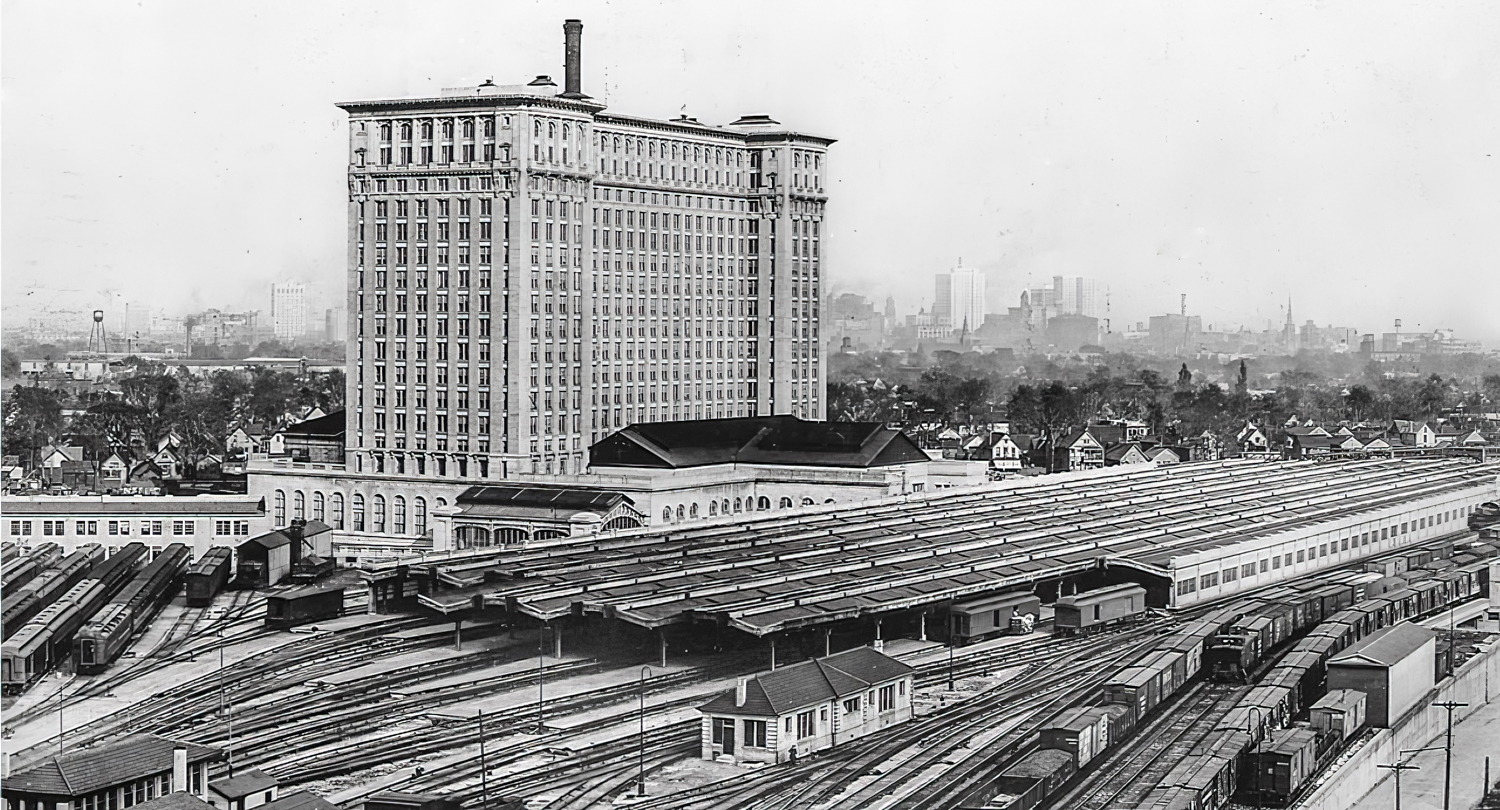
This continuity matters because the station itself has lived multiple lives. When it opened in 1913, it stood as a monumental symbol of connectivity. The station was the tallest in the world at the time, moving hundreds of trains and thousands of passengers each day. After its closure in 1988, the building became a symbol of abandonment. Redevelopment introduces a third condition: reinvention. The salvaged rails hold evidence of all three eras simultaneously. Removal signals decline; reintegration signals care.
Material reuse often focuses on sustainability metrics; waste diverted, carbon reduced, and resource conservation. While those benefits are real, the rail tracks demonstrate an additional value: emotional durability. Authentic materials communicate time in ways new materials cannot replicate. They allow visitors to encounter history without interpretation panels or explanation. The story is embedded in the object.
Throughout the site, the landscape expresses a deliberate “peeling back” of historic layers at Michigan Central Station. The multi-terraced design uses the historic platform as the high point, gradually stepping down to reveal past infrastructure while shaping a layered contemporary landscape.
Former footing foundations are conceptually integrated into the garden as subtle traces of the historic infrastructure. Rather than removing these remnants, the design uses them to inform layout, alignment, and moments of material expression, allowing past structural systems to shape present experience.
Historic material will continue to shape everyday experiences at Michigan Central Park. Salvaged stones from the pre-renovation station are reused throughout the landscape. The team tagged and reclaimed selected pieces on site, incorporating them into water features, seating, and amphitheaters.
These salvaged elements transform the landscape at Michigan Central Park by building bridges between the foundation of history and the future of the place.